For years, the conversation around education has been framed as a comparison traditional versus modern. One is often seen as outdated, the other as progressive. One rigid, the other flexible. But these framing misses something important.
Education is not a competition between two systems. It is a reflection of what society values at a given time and what it needs next.
Today, as the world becomes more complex, fast-moving, and interconnected, the real question is no longer:
Which system is better?
Instead, it is: What kind of learning truly prepares individuals for life beyond the classroom?
What Traditional Education Was Designed to Do
Traditional education was never random. It was carefully structured to meet the needs of its time. Built around classrooms, fixed schedules, and teacher-led instruction, it emphasized discipline, routine, and the systematic transmission of knowledge. Learning was standardized so that students progressed in a uniform manner, guided by textbooks, lectures, and direct instruction within clearly defined physical spaces.
This system brought several strengths that shaped generations of learners. It created strong teacher-student relationships, encouraged social development through peer interaction, and provided a consistent and predictable learning environment. It also helped instill habits such as punctuality, focus, and time management, which extend far beyond academics. For many decades, this model provided a stable and reliable foundation for education.
Where Traditional Systems Begin to Struggle
Despite its strengths, traditional education reveals certain limitations in today’s context. Its biggest challenge lies in its uniformity. When every student is expected to learn the same content, at the same pace, and in the same way, it becomes difficult to address individual differences. Some students may struggle to keep up, while others may feel held back.
Educational research highlights that this approach often places too much emphasis on memorization rather than deep understanding. It leaves limited room for creativity and independent thinking and tends to focus heavily on examinations instead of real-world application. In a world that increasingly values innovation and adaptability, these limitations have become more apparent.
The Emergence of Modern Education
Modern education did not emerge to replace traditional systems but to address their gaps. At its core, it shifts the focus from teaching to learning. Instead of centering the process around the delivery of content, it emphasizes how students engage with and understand that content.
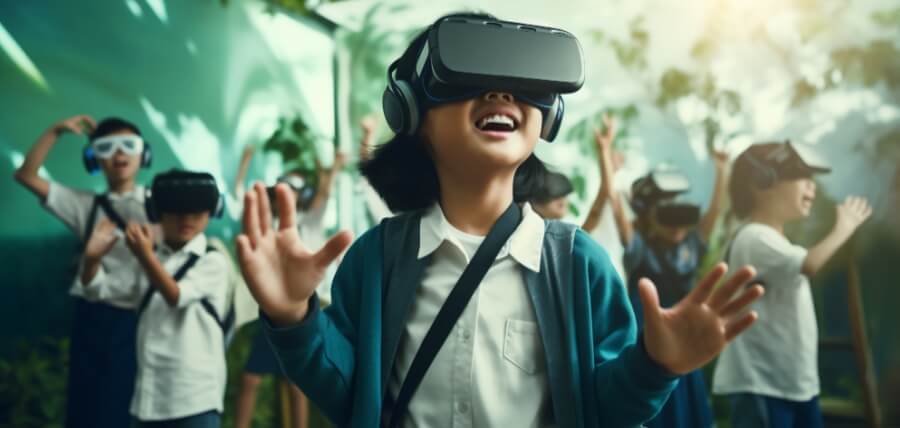
This approach introduces student-centered methods, flexible learning pathways, and technology-driven environments. Rather than relying only on textbooks and lectures, modern systems incorporate digital tools, interactive content, and collaborative experiences. Most importantly, it recognizes that learning is not identical for everyone and that each student may require a different approach.
What Modern Education Still Lacks
Despite its many advantages, modern education is not without its shortcomings. Reduced social interaction in digital environments can lead to feelings of isolation and disengagement. Unequal access to technology creates disparities, and the flexibility of modern systems can sometimes result in fragmented learning experiences.
In certain cases, the lack of structure can lead to inconsistency and a lack of direction. These challenges highlight an important truth that innovation alone does not guarantee effectiveness. Careful design and balance are essential.
Toward a Balanced Model of Learning
The future of education lies in integration. A balanced model combines structured classroom learning with flexible digital tools. It strengthens foundational knowledge while encouraging real-world application. It blends traditional assessments with project-based learning and combines teacher guidance with independent exploration.
Such an approach recognizes that learning is both guided and self-driven, both structured and adaptable. It creates an environment where stability and innovation coexist.
The Human Element That Cannot Be Replaced
Amid all these changes, one element remains constant. Education is fundamentally human. It is not just about acquiring knowledge or skills, but about building confidence, forming relationships, and discovering identity.
No system can succeed if it overlooks this human dimension. Face-to-face interaction, mentorship, and emotional support remain essential in shaping meaningful learning experiences.
Conclusion: Redefining, Not Replacing
The future of education is not about replacing traditional systems with modern ones. It is about redefining learning in a thoughtful and balanced way.
Traditional education has provided structure, while modern education brings flexibility. The real opportunity lies in combining these strengths to create systems that are both effective and meaningful.
The purpose of education has always been more than delivering information. It is about preparing individuals for life, helping them grow, adapt, and transform. As the world continues to evolve, education must do the same, with careful intention and a clear focus on the learner.