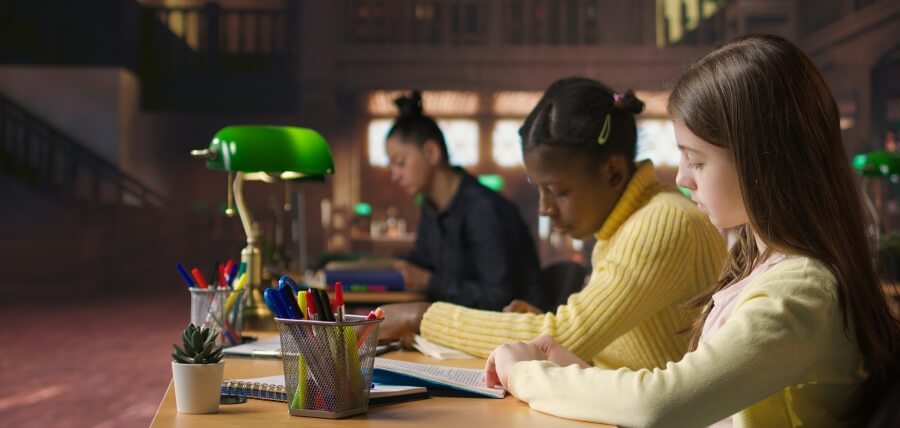
There is a quiet but profound shift happening in classrooms around the world. It is not always visible in new buildings or devices, though those are part of the story. It is felt in smaller moments. A student pauses mid-lesson to question what they are learning and why. A teacher looks at a room full of learners who each carry different realities shaped by technology, culture, and uncertainty. A parent wonders whether school is preparing their child for a future that even adults struggle to imagine.
The modern education is not simply about updating textbooks or adding screens to classrooms. It reflects a deeper transformation in how we understand knowledge, relationships, and the purpose of learning itself. Information is no longer scarce. Students can access facts instantly, but making sense of those facts, questioning them, and applying them meaningfully has become far more complex. At the same time, social realities are shifting. Families are more diverse. Attention is more fragmented. Expectations are higher, yet patience is thinner.
In this landscape, schools are being asked to do more than ever before. They are expected to nurture critical thinking, emotional resilience, creativity, and ethical awareness, often within systems that still reward memorization and standardization. Technology offers powerful tools, but it also introduces new pressures. The challenge is no longer whether education should change, but how it can change without losing its human core.
The Emotional and Ethical Trade-Offs in Modern Education
Modern classrooms are shaped by a series of quiet trade offs that educators and families navigate every day. These are not abstract debates. They are lived decisions, often made under pressure and with incomplete information.
Consider the tension between coverage and depth. Many curricula still emphasize completing a wide range of topics within limited time. Yet teachers often notice that students remember very little when learning is rushed. What happens when a teacher chooses to spend an extra week exploring one idea deeply, knowing it may mean leaving another topic untouched? Is that a risk or a responsibility?
Then there is the pull between efficiency and creativity. Digital tools can streamline grading, track performance, and deliver content quickly. They can save time, which teachers desperately need. But efficiency can sometimes narrow the space for exploration. A lesson that fits neatly into a digital platform may not leave room for the messy, unpredictable conversations where real understanding often emerges. Have you ever seen a discussion take an unexpected turn and suddenly light up a classroom? That moment rarely fits into a predefined template.
Safety and freedom form another delicate balance. Schools are under increasing pressure to ensure emotional and physical safety. Policies, monitoring systems, and structured routines are designed with good intentions. Yet too much control can limit a student’s ability to take intellectual risks. Learning often requires uncertainty, even discomfort. How do we protect students without overprotecting them?
Imagine a school leader reviewing two approaches. One offers a standardized, data driven system that promises measurable improvements and consistency across classrooms. The other allows teachers more flexibility to design learning experiences based on their students’ interests and needs, but with less predictable outcomes. The first feels safer, easier to justify. The second feels more human, but also more uncertain.
There are no perfect answers in these moments. Every choice carries consequences. What matters is not choosing one extreme over another, but making decisions with awareness. When educators remain intentional, they can preserve the relationships, curiosity, and sense of purpose that give education its meaning.
Closing
In a classroom somewhere, a student raises their hand, hesitates, and then asks a question that shifts the room. It is not part of the lesson plan. It is not something that can be measured easily. But it sparks a conversation. Another student leans forward. A teacher pauses, listens, and chooses to follow that thread for a few minutes.
In that moment, education feels alive.
There is no perfect model waiting to be implemented, no single approach that resolves all tensions. The modern education is not a finished system. It is an ongoing practice shaped by people who care enough to question, adapt, and try again.
Perhaps the real task is not to keep up with every change, but to stay grounded in what matters most. Relationships. Curiosity. The courage to rethink old patterns. And the humility to admit that learning, for both students and educators, is never complete.
If we can hold on to these, even as everything else shifts, education will not lose its humanity. It will evolve with it.